
Charging at Home Without Waiting or Wondering
EV Charger Installation in Taunton for homeowners adding electric vehicles and need reliable home charging
Tanner Lopes Electrician installs EV chargers in Taunton and surrounding towns for homeowners who have switched to electric vehicles and need a dedicated charging station that works every time they plug in. You need a circuit that can handle the continuous load without tripping, a charger mounted where you actually park, and wiring that meets code and manufacturer requirements. The installation includes running a dedicated circuit from the panel, mounting the charging unit, and testing the system under full load to confirm it delivers the correct amperage without overheating or voltage drop.
EV chargers are typically hardwired to a 240-volt circuit sized between 30 and 60 amps depending on the charger model and your vehicle's onboard charging capacity. A dedicated breaker is installed in the panel, and wire is run through conduit or rated cable to the charger location, usually in a garage or carport. The charger is mounted to a wall or post at a height that allows easy cable access to your vehicle's charge port, and the unit is grounded and tested before the breaker is energized. If your panel does not have available capacity for the new circuit, a panel upgrade is completed first to ensure the system can support both the charger and your home's existing electrical load.
If you are transitioning to an electric vehicle and need a home charging station installed correctly and safely, contact Tanner Lopes Electrician to discuss charger placement, circuit sizing, and whether your current panel can support the added load.
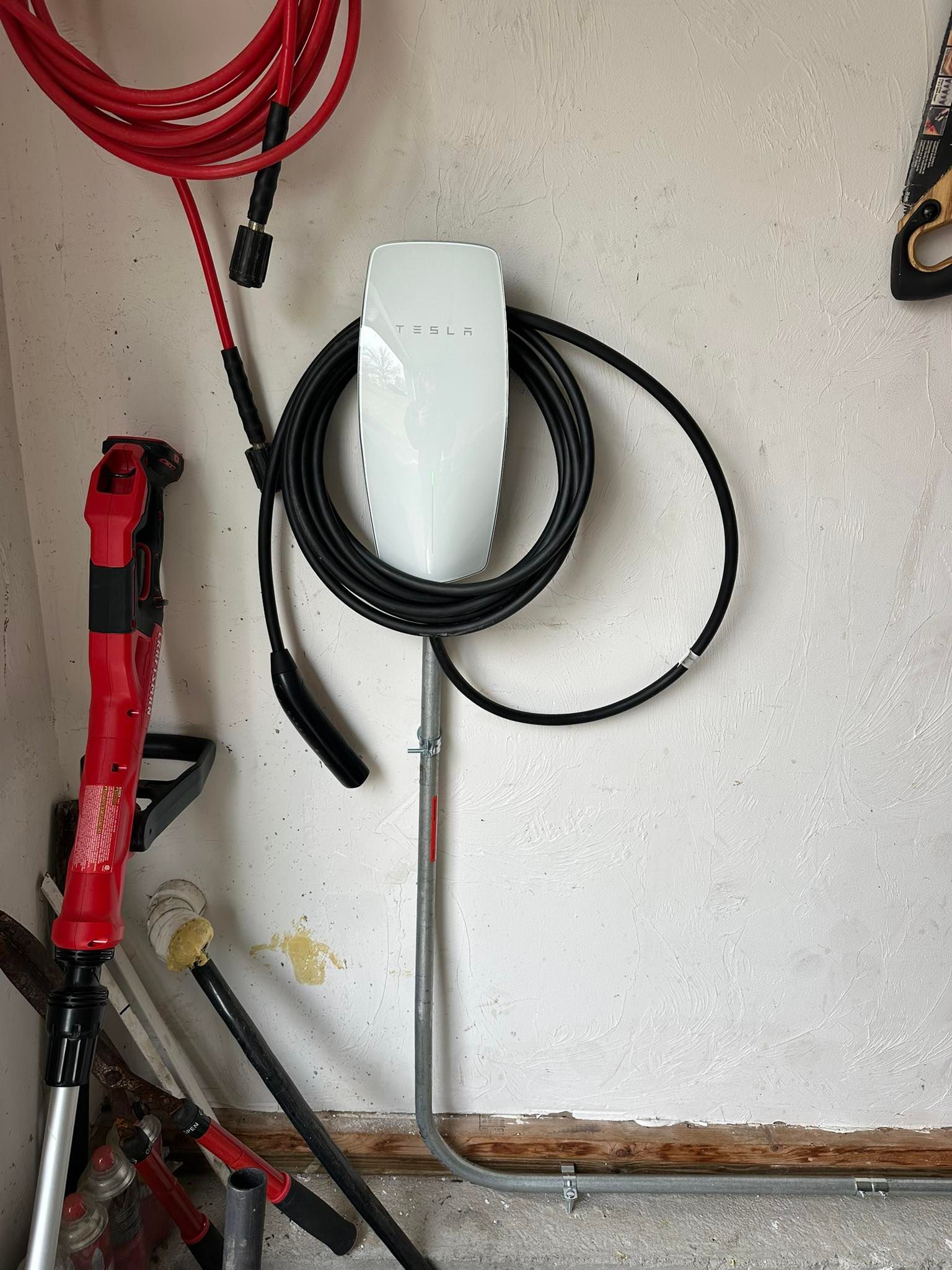
What Changes After a Charger Is Installed
You plug in your vehicle overnight and wake up to a full charge without driving to a public station or managing extension cords. The charger delivers consistent power at the rate your vehicle can accept, and the circuit remains stable under continuous use without tripping or overheating. Charging times vary based on your vehicle's battery size and the charger's amperage, but most Level 2 home chargers fully replenish a typical EV battery in four to eight hours.
After installation, your charger is mounted securely, the cable is long enough to reach your vehicle without strain, and the circuit is labeled clearly at the panel. Tanner Lopes Electrician confirms that the charger communicates properly with your vehicle, that the GFCI protection built into most units functions correctly, and that all connections are torqued to specification. If you plan to add a second charger or upgrade to a higher-amperage unit in the future, the installation is planned to allow for expansion without redoing the entire circuit.
The process includes confirming that your service entrance can handle the additional load, verifying that the charger location meets National Electrical Code clearance and mounting requirements, and coordinating any necessary permits and inspections. EV charger installation does not include purchasing the charger unit itself, though recommendations are provided based on your vehicle and charging needs. The work focuses on delivering safe, code-compliant electrical infrastructure that supports reliable daily charging.
Common EV Charger Installation Questions
Homeowners in Taunton often ask about circuit sizing, panel capacity, and how installation timing aligns with vehicle delivery or purchase.
What size circuit is required for a home EV charger?
Most Level 2 chargers require a 240-volt circuit rated between 30 and 50 amps, with the exact size determined by the charger's maximum output and your vehicle's onboard charging capacity.
How do you determine if a panel upgrade is needed before installing an EV charger?
If your panel is already near capacity or does not have available breaker slots for a new high-amperage circuit, an upgrade to a larger panel is completed before the charger circuit is installed.
When is conduit required for EV charger wiring in Taunton?
Conduit is required when wiring is run exposed along walls, in unfinished areas, or outdoors, and it protects the cable from physical damage and environmental exposure.
Why do some EV chargers take longer to charge than others?
Charging speed depends on the charger's amperage output and your vehicle's onboard charger rating, with higher-amperage units delivering faster charge times if the vehicle can accept the increased power.
How far can the charger be located from the electrical panel?
Chargers can be installed at any practical distance from the panel, but longer wire runs require larger gauge wire to prevent voltage drop, and installation cost increases with distance due to additional materials and labor.
If you are adding an electric vehicle to your household and need a home charging station installed with proper capacity and clean placement, reach out to Tanner Lopes Electrician to schedule a site evaluation and receive a complete installation quote tailored to your home and vehicle.