
Wiring That Keeps Systems Talking Correctly
Heating and Cooling Control Wiring in Taunton for HVAC installations, thermostat upgrades, and system replacements
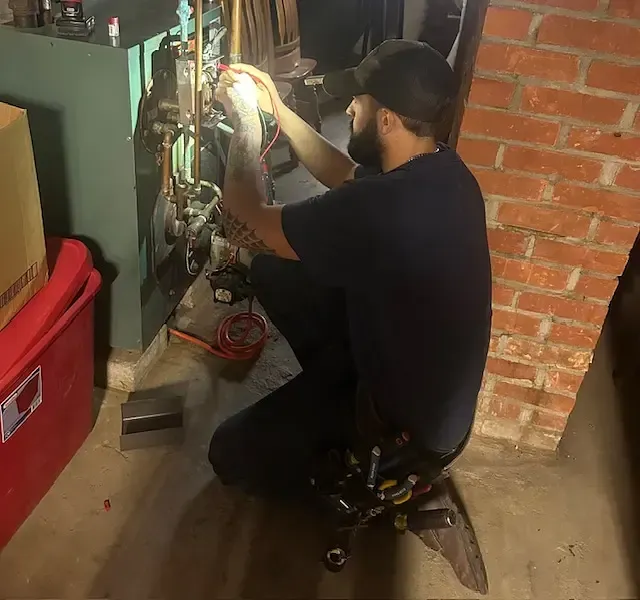
Tanner Lopes Electrician provides heating and cooling control wiring throughout Taunton and nearby communities for homeowners upgrading HVAC systems or installing new thermostats that require proper low-voltage connections. You need wiring that links the thermostat to the air handler, condenser, and any zone controls or accessories without voltage drop or signal interference. The wiring is run cleanly through walls or conduit, terminated correctly at each device, and tested to confirm the system responds as intended when heating or cooling is called for.
Control wiring involves running low-voltage wire from the thermostat location to the HVAC equipment, typically using 18-gauge multi-conductor cable with color-coded conductors for each function. Each wire corresponds to a specific terminal on the thermostat and equipment: power, heating, cooling, fan control, and common. If the system includes a heat pump, humidifier, or multi-zone setup, additional wires are run to support those functions. Connections are made inside the air handler or furnace control board and at the thermostat base, with each terminal secured and labeled to prevent miswiring during future service.
If you are replacing your heating and cooling system or upgrading to a smart thermostat and need the wiring installed correctly, contact Tanner Lopes Electrician to coordinate with your HVAC contractor and ensure the electrical side is handled properly.
Why Control Wiring Affects System Performance
Your thermostat sends low-voltage signals to control relays and circuits inside the HVAC equipment, and those signals must travel without resistance or interruption. If the wiring is undersized, damaged, or connected to the wrong terminals, the system may short cycle, fail to start, or run continuously without reaching the set temperature. Proper wiring ensures the thermostat can call for heat or cool, activate the blower, and shut the system down once the temperature is met.
After control wiring is installed, your thermostat responds immediately when adjusted, the system starts and stops at the correct times, and there are no error codes related to communication failures. Tanner Lopes Electrician routes wiring to avoid interference from power lines, secures it inside walls or along framing, and confirms continuity at every connection point. If the existing transformer does not provide enough voltage for the new system, a step-up transformer or additional power supply is installed to meet the equipment's requirements.
The work also includes verifying that the system's circuit breaker is properly sized, confirming that the disconnect switch near the outdoor unit is functional, and ensuring the thermostat location meets code requirements for placement and accessibility. Control wiring does not include ductwork modifications, refrigerant line installation, or HVAC equipment setup, though coordination with the HVAC installer is standard to ensure both electrical and mechanical systems are completed correctly.
Questions About HVAC Control Wiring
Homeowners in Taunton often ask about compatibility, wire types, and what happens when upgrading to programmable or smart thermostats.
What type of wire is used for HVAC control wiring?
Most systems use 18-gauge thermostat wire with multiple conductors, typically five to eight depending on whether the system includes heat pump functions, humidifiers, or multi-stage equipment.
How do you determine if existing wiring can support a new thermostat?
Existing wiring is tested for continuity and voltage, and the number of conductors is compared against the new thermostat's requirements, with additional wires run if the current setup lacks the necessary connections.
When is a new transformer needed during a control wiring upgrade?
If the HVAC system's existing transformer does not provide sufficient voltage for the new thermostat or added accessories, a replacement or supplemental transformer is installed to prevent power issues.
Why do some thermostats require a common wire when older ones did not?
Modern thermostats, especially smart models, require constant power to maintain WiFi connections and display functions, which is provided by the common wire rather than relying on battery backup alone.
How is control wiring routed in Taunton homes with finished walls?
Wire is fished through existing wall cavities using flexible bits or wire snakes, and small access holes are patched after installation, with conduit used in basements or utility areas where walls are not finished.
If you are upgrading your HVAC system or installing a new thermostat and need control wiring installed cleanly and correctly, reach out to Tanner Lopes Electrician to coordinate the electrical work and ensure your system operates reliably from day one.